Having established our need for spiritual dependence on God and grief for our sins, Jesus turns to his third beatitude:
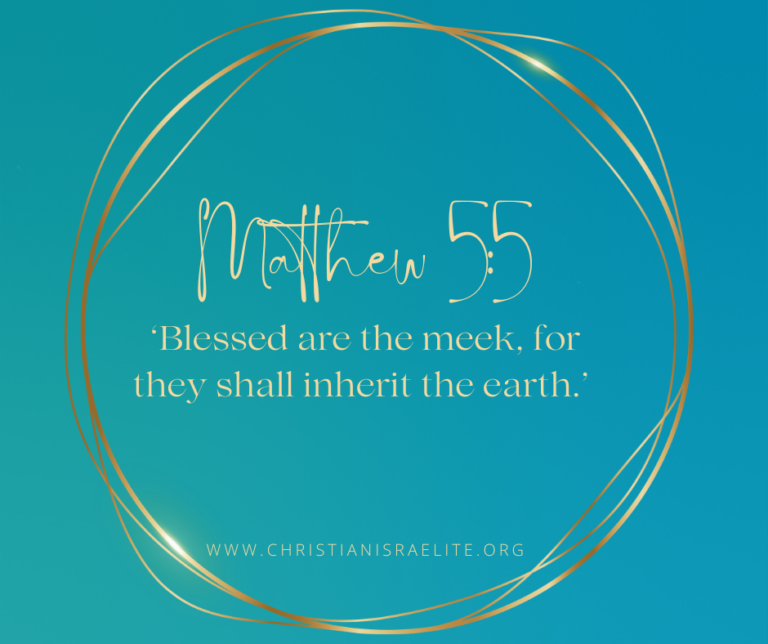
‘Blessed are the meek, for they shall inherit the earth.’ Matthew 5:5.
Today, meekness is almost universally misunderstood as weakness, passivity, or cowardice. In a competitive world, the meek are expected to finish last. However, in the kingdom of God, meekness is a position of immense spiritual authority. It is restrained strength and complete submission to God’s will. In the original Greek text, the word for meek is praus. This word was famously used to describe a wild stallion that had been thoroughly trained and broken in—still strong and fast, but under control.
We cannot be truly meek until we have first recognised our spiritual bankruptcy (poor in spirit) and grieved over our brokenness (mourning). A person who has felt sorrow for the presence of evil and repented loses the desire to look down on others or aggressively demand their own way. Meekness is the outward fruit of inward humility.
Jesus described himself as ‘meek and lowly in heart’ (Matthew 11:29). He had all authority, yet was humble. He didn’t defend himself aggressively, even when wronged. Through him, we see that meekness is not the absence of power, but power perfectly submitted to God.
It is those who have adopted this posture of the heart that Jesus says will inherit the earth. ‘Inherit’ sheds important light on the identity of the meek. Having sought redemption from their sins and a restored relationship to God, they have become his children and are thereby cared for and accounted for in his will. They won’t take the earth by force; it’ll be gifted to them by right of their spiritual lineage.
Many believe that ‘the earth’ is the new creation spoken of in Revelation 21, and citizenship in God’s Kingdom. However, as we are made of the earth (Genesis 2:7), we as Christian Israelites believe that ‘the earth’ also refers to our bodies, which will one day be made as Jesus’ glorious body (Philippians 3:21). Those who have been made right with God and overcome sin will inherit, as God’s sons and daughters, immortal bodies like his Son.
Within this is another paradox. By refusing to take our own vindication or glory by force, we make the way for God to bestow the ultimate inheritance upon us of his own free will:
‘And if children, then heirs; heirs of God, and joint-heirs with Christ; if so be that we suffer with him, that we may be also glorified together.’ Romans 8:17.
View other devotionals in this series