
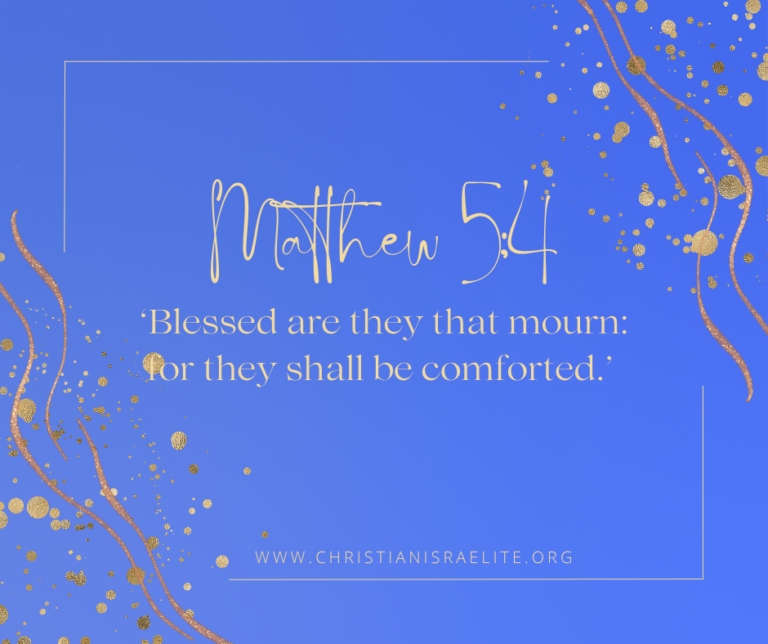
The second beatitude Jesus uttered was:
‘Blessed are they that mourn: for they shall be comforted.’ Matthew 5:4.
While it is certainly true that those who mourn due to a loss in their life will receive God’s comfort, this is not all that Jesus is speaking to.
When we recognise our spiritual poverty by becoming ‘poor in spirit’, it leads to spiritual mourning—for the state of our souls and of the world. It is grief for sin and a recognition of actions that are not aligned with God’s Word.
This type of grief prompts action. As Paul later wrote:
‘For godly sorrow worketh repentance to salvation not to be repented of: but the sorrow of the world worketh death.’ 2 Corinthians 7:10.
Worldly sorrow is regret without repentance. It is the grief of getting caught, the shame of damaged reputation, or the bitter disappointment that things did not go our way. It focuses entirely on the consequences of the action or the pain of the circumstance, rather than on our relationship with God. And, because it relies entirely on human effort to fix the problem, it offers no way out. It provides no path to salvation or redemption; rather, it leads to spiritual and even physical death, as seen in Judas Iscariot.
Godly sorrow is a grief that looks upwards. It’s mourning over our own sin and the brokenness of the world because we see that we have strayed far from God’s ideal—and the impact this has had on our relationship with him. It’s a sorrow that craves the restoration of that relationship.
As Jesus states, those who mourn in such ways will be comforted. God will meet them with forgiveness, mercy, grace, restoration, and peace. The paradox of this beatitude is that true spiritual comfort is only accessible through the doorway of grief.
In the present life, the Holy Spirit—whom Scripture explicitly titles the Comforter—provides an internal, supernatural peace that reassures the believer of their absolute reconciliation with God. Yet, this promise also points towards a grander fulfillment. It looks forward to the final establishment of his Kingdom, where God will permanently wipe away every tear, and death, sorrow, and crying will exist no more. For the believer, present mourning is always contextualised by the certainty of future glory.
In the meantime, true comfort comes not from avoiding sorrow, but from bringing it to God.
View other devotionals in this series