
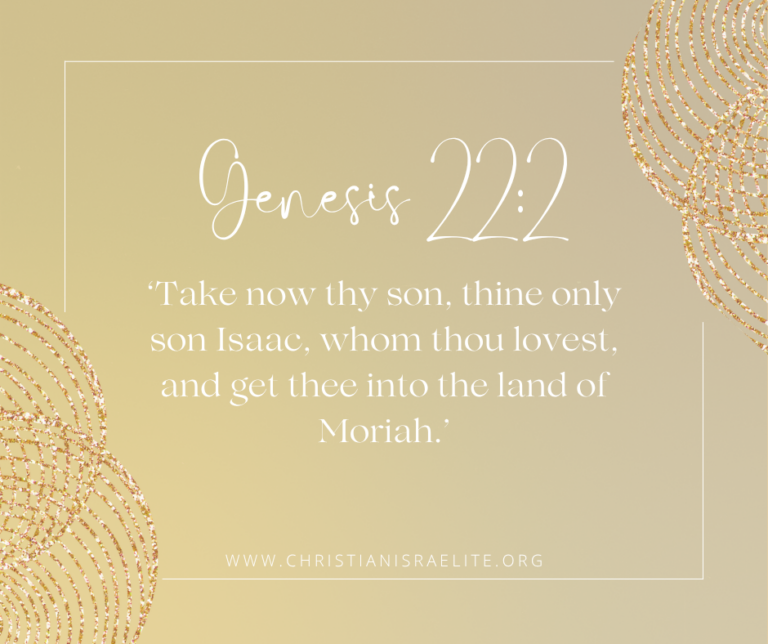
In Genesis 22, God commands Abraham to climb a mountain in the land of Moriah. This was not a summit of ease; it was the ultimate proving ground of surrender:
‘And it came to pass after these things, that God did tempt Abraham, and said unto him, Abraham: and he said, Behold, here I am. And he said, Take now thy son, thine only son Isaac, whom thou lovest, and get thee into the land of Moriah; and offer him there for a burnt offering upon one of the mountains which I will tell thee of.’ Genesis 22:1–2.
Here, ‘tempted’ (translated from the Hebrew nacah) does not mean an enticement to sin, but a deliberate testing and refining of faith.
On the ridges of Moriah, Abraham was asked to put his promises, future, and deepest earthly love on the altar.
The Bible provides a geographic thread that connects Abraham’s altar directly to the story of Jesus. Centuries after Abraham walked up that hill, King Solomon built the great temple of Israel on the same mountain:
‘Then Solomon began to build the house of the Lord at Jerusalem in mount Moriah, where the Lord appeared unto David his father.’ 2 Chronicles 3:1.
Because of Solomon’s record, we know that Moriah is the Temple Mount in Jerusalem. And nearby, on the same rocky spine of land, sits a rugged hill that the New Testament calls Calvary. When Abraham walked up Mount Moriah, he was walking the very ground where Jesus would give his life two thousand years later.
Just as they share the same ridge, the testing of Abraham on Moriah acts as a powerful foreshadowing for the sacrifice of Jesus:
When Isaac looked at the wood and asked, ‘where is the lamb for a burnt offering?’, Abraham prophesied a truth that echoed down the mountain for centuries: ‘My son, God will provide himself a lamb’
On Moriah, God stopped Abraham’s hand and provided a ram caught in the thicket. He spared Abraham’s son. But centuries later, on the same mountain range, God did not spare his own Son. Jesus became the Lamb that Abraham spoke of.
Moriah teaches us that true surrender means trusting God with the things we love the most. It reminds us that when we are asked to lay something precious down on our own mountains of testing, we can do it knowing that God has already gone before us, providing everything we need.
Next time, we’ll journey to Mount Sinai, where a wandering people will meet the holy majesty of God and his law.