
The opposition between life and death is one of the main themes of the Bible. God describes himself as the ‘God of the living’ (Mark 12:27), while Satan or the devil is described as having the ‘power of death’ (Hebrews 2:14). God initially designed us to be healthy, happy and immortal, but after Adam and Eve disobeyed him, sin and evil came into the world and humanity became subject to death (Genesis 3). As Satan gains his power from death, he proactively tempts and drives us towards sin so that we become increasingly subject to death (1 John 3:8).
Death, however, was never part of God’s plan. Everything God instructs us to do is to bring us life, but he does allow us to choose an alternative path if we wish to. Where God offers us healing and a cure (Jeremiah 33:6), the devil offers us disease and sickness. Where God offers us joy and an abundant life, Satan ‘comes to steal, and to kill, and to destroy’ (John 10:10). Where God offers us blessings if we do his will, Satan makes way for curses when he tempts us to sin (Deuteronomy 28). The devil tries to divert us from anything God instructs us to do as he knows that such things bring long life and blessings. The story hasn’t changed in thousands of years: God still desires us to have life, and life is still at war with death.
Physical death is a separation. It parts us from our loved ones, but it is also a separation of the spirit from the body:
‘Then shall the dust return to the earth as it was: and the spirit shall return unto God who gave it.’ Ecclesiastes 12:7.
While death is not God’s plan for us, and the Christian Israelite Church is focused on celebrating and pursuing life, death is an unfortuante reality in this fallen and corrupt world. Until Jesus Christ returns, we remain subject to death and, with it, the grief of being separated from our loved ones.
Thankfully, God provides us with hope of life after death through soul salvation (Psalm 49:15) and the promise of a resurrection when Jesus Christ returns (Acts 24:15). For those who die in the faith of Jesus Christ, we can be assured that they are resting in peace and enjoying the presence of God. They are freed from all worries and torments. Jesus’ victory over death means there is no longer any need for Christians to fear death:
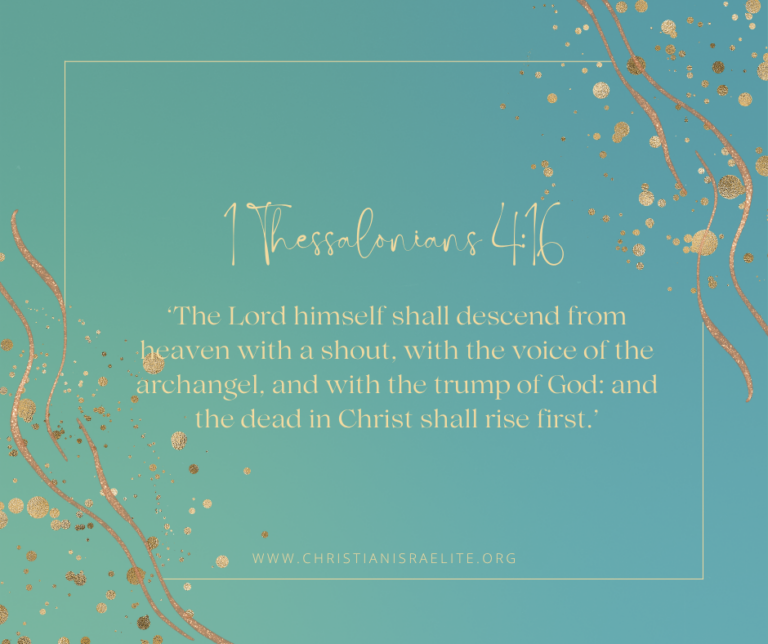
‘The Lord himself shall descend from heaven with a shout, with the voice of the archangel, and with the trump of God: and the dead in Christ shall rise first.’ 1 Thessalonians 4:16.
For those who die without any belief in God or Jesus Christ, Christian Israelites believe they will still be raised at the final resurrection (Acts 24:15), and that in the end, ‘at the name of Jesus every knee should bow … and that every tongue should confess that Jesus Christ is our Lord’ (Philippians 2:10-11). We know that God will ‘not leave my soul in hell’ (Psalm 16:10). We will be reunited with our departed loved ones one way or another. The promise is not designed to minimise our grief, but to give us hope that death does not and never will have the final victory over us.
Next week, we’ll explore how grief appears in the Bible and the comfort these stories still offer today.
View other devotionals in this series